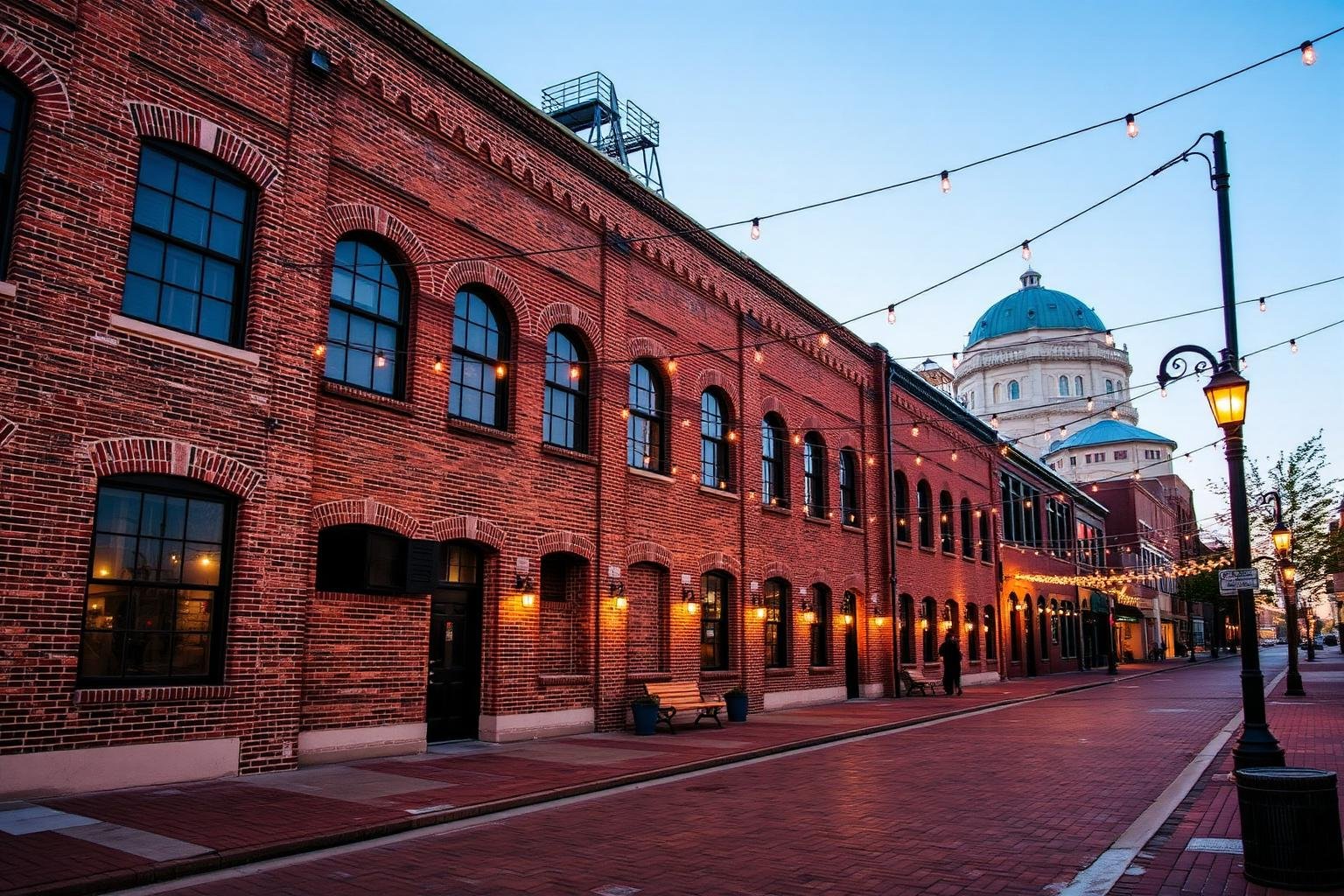
Blue Dome District Tulsa: A Practical Guide to Downtown Homes and Urban Living
The Blue Dome District Tulsa is a compact downtown area known for historic buildings, restaurants, nightlife, events, and a growing collection of urban residences. For people researching Blue Dome District homes or considering living in Blue Dome District Tulsa, the appeal is less about traditional suburban housing and more about walkability, architecture, entertainment, and access to the center of the city.
Where the Blue Dome District Is Located
The Blue Dome District sits in downtown Tulsa, near the intersection of East Second Street and South Elgin Avenue. Its recognizable landmark is the blue-domed building at the district’s center, while nearby streets include East First and Second Streets, East Third Street, South Detroit Avenue, South Cincinnati Avenue, and South Elgin Avenue.
The district is close to several well-known parts of downtown, including the Tulsa Arts District to the north, the Deco District and Tulsa Performing Arts Center to the west, and the Greenwood District farther northeast. The BOK Center, ONEOK Field, Guthrie Green, Tulsa Club Hotel, and downtown office buildings are also within the broader central-city area.
For transportation, residents have access to downtown street networks, major north-south routes such as U.S. 75, and nearby connections to Interstate 244. Tulsa Transit also serves downtown, and the district’s compact layout makes walking practical for many daily activities.
What Living in Blue Dome District Tulsa Is Like
The Blue Dome District neighborhood has a distinctly urban atmosphere. It is active around restaurants, bars, live music venues, festivals, sporting events, and downtown work hours. Evenings and weekends can feel very different from weekday mornings, especially when events are taking place at nearby venues.
This is not a conventional residential neighborhood with broad lawns, cul-de-sacs, and detached houses on every block. Instead, housing is integrated into a commercial district. Residents may live above storefronts, inside converted historic buildings, or in newer apartments and condominiums designed for downtown living.
That setting can suit people who value:
– Walking to dining and entertainment
– Proximity to downtown offices and venues
– Historic architecture and urban streetscapes
– Smaller, lower-maintenance residences
– Easy access to Tulsa’s central districts
Noise, traffic, event activity, parking arrangements, and limited private outdoor space are important considerations. Buyers should evaluate the specific building and block rather than assuming every part of the district offers the same experience.
Blue Dome District Homes and Architectural Character
Blue Dome District real estate is shaped by Tulsa’s commercial history and ongoing downtown redevelopment. Many of the area’s older structures were built for retail, offices, services, or entertainment rather than single-family residential use. As a result, residential spaces often have features associated with adaptive reuse.
Common characteristics may include:
– Brick or masonry exteriors
– Large street-facing windows
– High ceilings
– Open layouts
– Exposed structural or mechanical elements
– Historic details alongside modern finishes
– Limited private yards
– Shared building entries, elevators, or corridors
Some residences are located in renovated historic properties, while others are part of newer infill or mixed-use construction. Floor plans can range from compact studios and one-bedroom units to larger loft-style residences. The amount of storage, natural light, sound insulation, and outdoor space varies considerably by building.
People searching for Blue Dome District homes should pay close attention to the practical differences between a historic loft, a condominium, an apartment-style residence, and a townhome or detached property located just outside the district. Ownership structure, maintenance responsibilities, parking, and building amenities can all differ.
Downtown Dining, Entertainment, and Recreation
One of the strongest reasons people consider the Blue Dome District is its access to downtown destinations. Restaurants, cocktail bars, coffee shops, music venues, and event spaces are concentrated throughout the district and adjacent downtown areas. The neighborhood is also close to larger entertainment venues, including the BOK Center and Cain’s Ballroom in the nearby Tulsa Arts District.
ONEOK Field, home of the Tulsa Drillers, is north of downtown and provides another major destination for residents who enjoy baseball and outdoor events. Guthrie Green offers a public gathering space with concerts, festivals, and community programming in the Arts District.
For parks and outdoor recreation, the district is more urban than park-oriented. Residents typically use downtown public spaces and travel to larger parks, trails, and recreational areas elsewhere in Tulsa. The Arkansas River, Gathering Place, and River Parks system are accessible by car or bike from downtown, although they are not located within the Blue Dome District itself.
Shopping is primarily focused on downtown services, specialty businesses, restaurants, and entertainment rather than large retail centers. More extensive shopping is available in other parts of Tulsa along major commercial corridors.
Homeownership Considerations in an Urban District
Buying into the Blue Dome District neighborhood requires a different ownership mindset than purchasing a suburban house. In a condominium or converted commercial building, monthly dues may help cover shared building insurance, exterior maintenance, common areas, elevators, security systems, or other services. The exact responsibilities depend on the property and governing documents.
A buyer should also think about:
– Dedicated parking versus street or shared parking
– Storage space for bicycles, seasonal items, and household equipment
– Window orientation and natural light
– Sound from nearby businesses, traffic, and events
– Building access and elevator condition
– Restrictions on renovations, flooring, pets, or rentals
– Water intrusion, roof maintenance, and exterior masonry in older buildings
– Heating, cooling, plumbing, and electrical upgrades
Historic character can be a major benefit, but older structures may also require careful maintenance. In a renovation, the building’s structural systems, fire protection, plumbing, electrical capacity, and approval process may be just as important as finishes such as cabinets or flooring.
Remodeling Opportunities for Blue Dome District Residences
Remodeling in the Blue Dome District often involves improving an existing urban layout rather than adding square footage to a large lot. A well-planned renovation can make a smaller residence feel more functional while preserving the architectural features that give it personality.
Making Loft and Condo Layouts Work Better
Open floor plans can be attractive, but they do not always provide enough separation for sleeping, working, entertaining, and storage. Remodeling may include built-in cabinetry, partial partitions, glass walls, improved lighting, or carefully designed millwork that defines spaces without eliminating the loft’s openness.
Kitchen remodeling is another common opportunity. Updated cabinets, better storage, durable countertops, efficient appliances, and improved task lighting can make a compact kitchen more useful. In some buildings, plumbing locations or structural walls limit the available options, so design and construction planning are especially important.
Bathroom renovations can address outdated finishes, poor lighting, inefficient storage, or accessibility concerns. A carefully designed shower, improved ventilation, and modern fixtures can significantly improve daily use without changing the entire footprint.
Other possible projects include:
– Primary bedroom and closet improvements
– Custom storage for narrow or irregular spaces
– Sound-control upgrades where feasible
– Flooring and finish updates
– Laundry-area improvements
– Energy-efficiency upgrades
– Aging-in-place features such as curbless showers and better lighting
Large additions are less common in a dense downtown district, but a whole-home renovation or interior reconfiguration may deliver many of the same benefits. Homeowners may choose to update rather than move because they value their building, location, views, or access to downtown activities.
Castle Remodels serves homeowners throughout the Greater Tulsa area and can help clients think through kitchen remodeling, bathroom renovations, additions, and larger residential improvements. For Blue Dome District projects, early planning is particularly valuable when a building has shared systems, historic elements, or condominium requirements.
Is the Blue Dome District Right for You?
The Blue Dome District Tulsa offers a form of homeownership centered on urban access, historic architecture, and downtown activity. It may be a strong fit for buyers who prefer restaurants, entertainment, and cultural destinations nearby and who do not need a large yard or a traditional suburban floor plan.
The best Blue Dome District real estate choice depends on the individual building, layout, ownership structure, parking arrangement, and renovation potential. For homeowners ready to improve a downtown residence, contact Castle Remodels to discuss your kitchen remodel, bathroom remodel, addition, or whole-home renovation project.